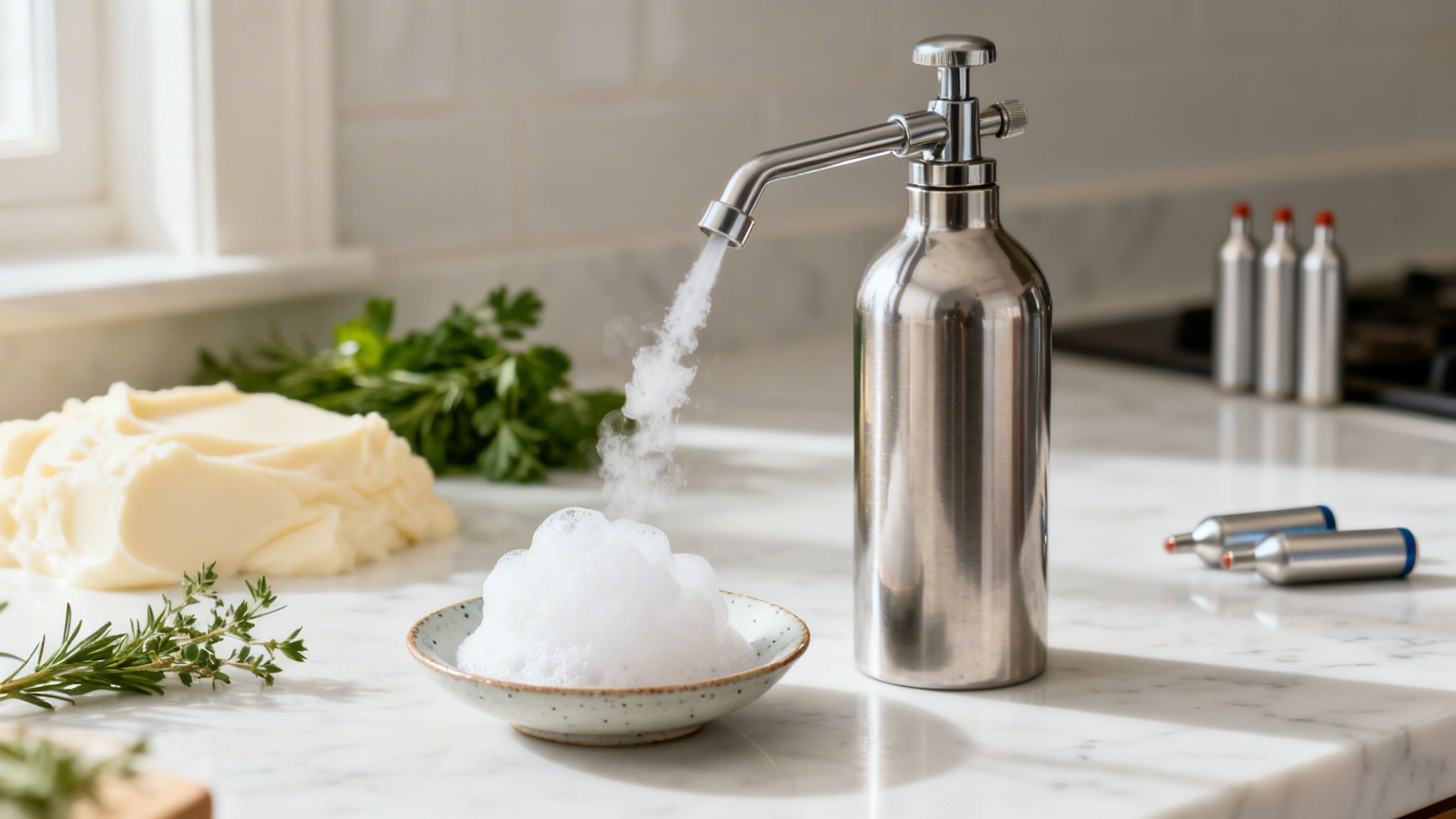

Your Definitive Guide to the Sifon Para Cocinar
Summary
This guide offers a practical, no-fluff walkthrough of the sifon para cocinar, or culinary siphon. It covers what it is, how it works, and why it's a must-have tool for professional kitchens and bars. You'll learn the science behind perfect foams, the critical difference between N2O and CO2, and real-world applications for creating signature espumas, sauces, and rapid infusions. We also provide essential safety protocols, maintenance checklists, and logistical advice for sourcing professional-grade nitrous oxide, making this a comprehensive resource for any hospitality business looking to elevate its craft.
Key Points
- What it is: A culinary siphon uses pressurized gas (N2O) to transform liquids into foams, mousses, or rapidly infuse flavors.
- How it works: Nitrous oxide dissolves into a liquid under pressure. When the pressure is released, the gas expands, creating millions of fine, stable bubbles.
- Why N2O is essential: Nitrous oxide is fat-soluble and flavor-neutral, creating smooth, velvety textures. Carbon dioxide (CO2) is water-soluble and acidic, which would curdle dairy and ruin flavors.
- Key Applications: Create light espumas, hold warm sauces like hollandaise, craft lighter batters, build silky cocktail foams, and rapidly infuse spirits with fresh ingredients in minutes.
- Safety is Non-Negotiable: Proper assembly, rigorous daily cleaning, and using only certified food-grade N2O (E942) are critical for performance and food safety.
- Sourcing Matters: Partnering with a professional B2B supplier who understands local logistics (like in the Canary Islands) and provides compliant documentation is a strategic advantage.
A sifon para cocinar, or culinary siphon, is one of those tools that separates the good kitchens from the great. At its heart, it’s a device that uses pressurised gas to completely transform liquids. It’s most famous for turning cream into ethereal foam, but its real genius lies in rapid flavour infusions, creating foams from almost any liquid, and building incredible textures in seconds.
The magic is all about dissolving gas into a liquid under pressure. Once you get the hang of it, you can produce sophisticated results that would otherwise take hours of traditional prep.
What Is a Sifon Para Cocinar and How Does It Work?
Think of a culinary siphon as a high-pressure bottle, a precision instrument that’s become a staple in modern gastronomy. From Michelin-starred kitchens to the most creative cocktail bars, chefs and mixologists rely on it to manipulate texture and density. It’s how they turn something familiar into a completely new sensory experience.
Let me put it another way. When you use a whisk, you’re slowly forcing air into a liquid with a lot of manual effort. A siphon does something similar but on a whole different level. It uses pressurised nitrous oxide (N2O) to achieve a far superior result, and it does it almost instantly.
The Internal Mechanics of Aeration
The science behind it is pretty cool, but the process itself is straightforward. Here’s how it works from start to finish:
- Fill It: You begin by pouring your liquid base into the siphon’s stainless steel body. This could be anything from a simple heavy cream to a complex fruit purée or a savoury cocktail mix.
- Charge It: Next, you secure the head and charge the siphon. You can either screw on a small gas cartridge or, for higher volume, attach a hose from a larger cylinder. This pierces the seal, releasing pressurised N2O gas into the canister.
- Shake It: A few vigorous shakes are all it takes to help the gas dissolve completely into the liquid. This is where the properties of N2O really shine—it’s highly fat-soluble, so it binds beautifully with the fat molecules in ingredients like cream.
- Dispense It: When you pull the lever, you’re releasing the pressure. The liquid is forced out through a nozzle, and that sudden drop in ambient pressure causes the dissolved gas to expand in a flash.
This rapid expansion creates millions of tiny, stable bubbles, giving you that signature velvety foam, or espuma. It’s a controlled, predictable process that puts you in complete command of the final texture.
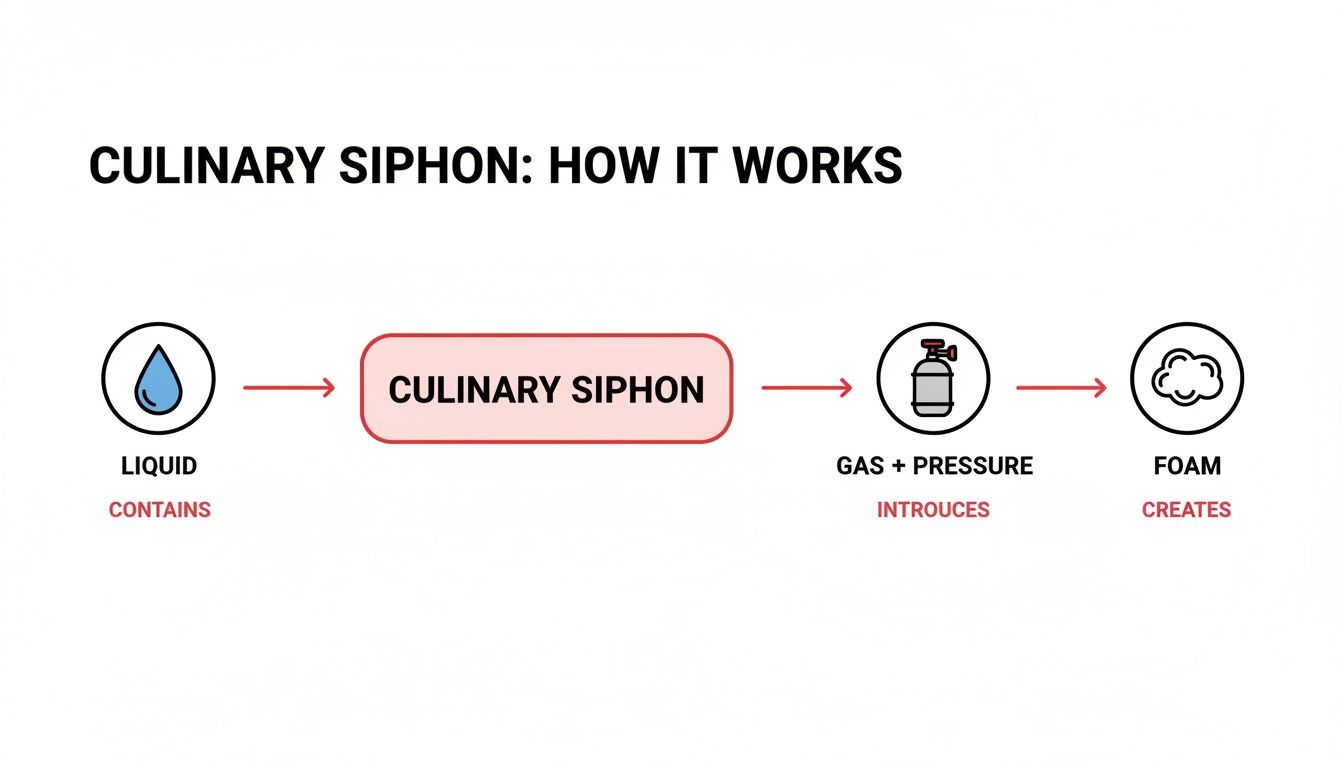
As you can see, that moment of pressurisation is what turns a basic liquid into something complex and airy. It’s a game-changer.
More Than Just Whipped Cream
Perfect whipped cream is just the starting point. The true value of a sifon para cocinar is its incredible versatility. The same principles of pressurisation and infusion open up a whole world of culinary techniques. To get a better sense of this, you might find our guide on what cream chargers are used for in bars and restaurants helpful.
To give you a clearer picture, here’s a quick rundown of what a siphon can do.
Siphon Applications at a Glance
This table breaks down the main transformations you can achieve with a siphon, moving far beyond simple whipped cream.
| Application | What It Is | Common Ingredients Used |
|---|---|---|
| Foams & Espumas | Creating light, airy textures from savoury or sweet liquids. | Vegetable purées, fruit juices, cheese sauces, broths |
| Rapid Infusions | Forcing flavour from solids (herbs, spices) into liquids (oils, spirits). | Spirits, vinegars, simple syrups, oils |
| Carbonation | Adding fizz to cocktails or creating sparkling fruit juices on the spot. | Cocktails, fruit juices, water |
| Mousses | Making dense, rich mousses without eggs or excessive gelatin. | Chocolate, fruit coulis, avocado |
Each of these applications relies on the same core principle: using pressure to change a liquid's physical properties in a controlled, repeatable way.
A cooking siphon isn't just for garnishes; it's an instrument for re-engineering texture and flavour. It lets you add lightness to a heavy sauce, intensify the botanicals in a gin, or serve a familiar ingredient in a way nobody expects.
I’ve seen chefs use it to create everything from a delicate hollandaise foam to a rapid-infused chilli oil. It’s a tool that rewards creativity with consistency and efficiency, something you just can't get with old-school methods.
Why Nitrous Oxide Is Essential for Culinary Foams
To really understand what makes a sifon para cocinar work its magic, you have to look past the hardware and get into the science of the gas inside. It’s not just about pressure; it’s about the right kind of pressure. In any professional kitchen, food-grade nitrous oxide (N2O) is the only real choice, and the reasons are all down to chemistry.
The single most important property of N2O is something called liposolubility—put simply, its unique ability to dissolve completely in fat. When you charge a siphon filled with a fatty liquid like cream, egg yolks, or even an oil-based dressing, the gas doesn’t just sit on top. It literally merges with the liquid, waiting for you to pull the trigger.
The Science of the Perfect Foam
The moment you pull the siphon's lever, the pressure inside drops dramatically. This sudden change forces the dissolved N2O to rapidly expand and turn back into a gas, creating millions of tiny, perfectly uniform bubbles throughout your base mixture.
This is how you get those incredibly stable, rich, and velvety textures that culinary siphons are famous for. The foam is dense but feels weightless, with a smooth mouthfeel you could never achieve by whisking. Most importantly, N2O is almost tasteless and odourless, so it doesn't leave a weird chemical or metallic tang. It just lets the pure flavour of your ingredients take centre stage.
"Nitrous oxide's ability to dissolve in fat is the key. It creates a much finer and more stable bubble structure than other gases, resulting in a superior mouthfeel that is essential for high-end gastronomy."
This is the secret behind transforming a basic potato purée into an airy espuma that holds its shape, or turning a simple fruit coulis into a cloud-like mousse without adding heavy gelatines or stabilisers.
Nitrous Oxide vs Carbon Dioxide: A Crucial Distinction
So, why can’t you just use the same gas that puts the fizz in your soft drinks? The answer comes down to two things: solubility and flavour. Carbon dioxide (CO2), the gas used for carbonation, is water-soluble, not fat-soluble.
This one difference changes everything. Let’s look at them head-to-head.
Gas Properties and Their Culinary Impact
| Feature | Nitrous Oxide (N2O) | Carbon Dioxide (CO2) |
|---|---|---|
| Solubility | Highly fat-soluble (lipophilic) | Primarily water-soluble (hydrophilic) |
| Bubble Size | Forms very fine, small, and uniform bubbles. | Forms larger, more aggressive bubbles. |
| Texture | Creates a smooth, creamy, and velvety mouthfeel. | Produces a sharp, fizzy, and "prickly" sensation. |
| Flavour Profile | Neutral and slightly sweet; does not alter flavour. | Creates carbonic acid in water, adding a distinct acidic "bite." |
| Best For | Dairy, creams, oils, egg-based sauces, and delicate foams. | Carbonating water, soft drinks, and some acidic cocktails. |
Trying to make a cream-based foam with CO2 would be a complete disaster. The big, harsh bubbles would create a grainy, unpleasant texture, and the carbonic acid formed in the process would curdle the dairy and add a sour, metallic taste. For the sophisticated results demanded in professional kitchens and bars, choosing the right gas isn’t a preference—it's a technical requirement.
This is also why it's so important to work with a B2B partner who understands the difference. To be sure you're getting the correct, compliant gas for your operation, it pays to understand the fundamentals of nitrous oxide compliance and logistics for hospitality. It’s what guarantees both quality and safety in every cylinder.
Mastering Professional Culinary Applications
The theory is interesting, but the real magic of a sifon para cocinar happens on the line during a busy service. Sure, it makes perfect whipped cream, but that’s just scratching the surface. This tool has a permanent spot in my kitchen because it unlocks textures and efficiencies across the entire menu, from savoury starters to desserts.
A siphon gives you control over density. It can take something familiar and make it surprising, turning a heavy purée into a light, flavour-packed cloud. This isn't just about showing off; it's about creating memorable dishes for your guests and making prep faster for your team. This is where a simple piece of kit becomes an absolute workhorse.
Creating Signature Espumas and Foams
The most famous use is, without a doubt, making espumas. The concept is simple: you’re delivering intense flavour without the weight. Instead of a thick, heavy sauce that coats the palate, an espuma offers a burst of flavour that dissolves in an instant. The trick is always to start with a perfectly smooth liquid base that has something to help hold the structure.
Here are a couple of classic ideas that always work:
- Savory Potato Espuma: Think of a traditional potato and leek soup, but as a warm, airy foam. We blend the cooked vegetables with stock and a bit of cream, pass it through a fine-mesh sieve twice, then chill it. Charge it in the siphon, and you can pipe a delicate, intensely savoury potato cloud over seared fish or steak.
- Light Fruit Mousses: I’ve seen pastry sections spend hours folding traditional mousses. With a siphon, you can get a lighter, more vibrant result in minutes. A fresh fruit purée, a touch of dissolved gelatin or agar-agar, strained, and charged. You get a dessert that tastes purely of the fruit, with a texture that’s impossible to achieve by hand.
The rule I tell my cooks is simple: if you can blend it smooth, you can probably turn it into an espuma. It’s a technique that adds a layer of sophistication and visual appeal that just lifts the entire plate.
Reinventing Sauces and Batters
Don’t just think cold. A siphon is brilliant for holding warm mixtures, which completely changes the game for classic sauces and even fried batters. Because the mixture is under pressure, it holds emulsions together and prevents them from splitting or losing their airiness.
For instance, a warm hollandaise held in a siphon stays perfectly light and stable throughout a three-hour brunch service. It’s ready to dispense instantly, and you eliminate the risk of a broken sauce right in the middle of a rush. For any high-volume kitchen, that consistency is priceless.
Another one of my favourite tricks is for tempura batter. An aerated batter from a siphon fries up incredibly light and crisp, absorbing far less oil. It completely redefines what a fried dish can be. A well-stocked kitchen will always have a sifon para cocinar right next to its other core tools, something you’ll see in any professional catalogue covering serious cookware and kitchenware essentials.
The Importance of Ingredient Choice
Your results will only be as good as your base. A siphon won't magically create a stable foam out of thin air; the N2O gas needs something to latch onto. Without a proper stabiliser, you'll just get a runny liquid that falls flat the moment it hits the plate.
Here's what I’ve learned to rely on:
- Fat: This is the easiest and most natural stabiliser. N2O is fat-soluble, so ingredients like heavy cream (at least 30% fat), egg yolks, or coconut cream work beautifully.
- Protein: Egg whites are fantastic for creating structure in foams without adding much flavour, giving you a clean base to work with.
- Gelatin or Agar-Agar: When you’re working with fat-free liquids like a vegetable consommé or fruit juice, you need to give the gas something to hold onto. A small amount of gelatin (or agar-agar for a vegan option) provides the framework needed to trap the bubbles.
Getting the stabiliser right is the key to consistent, predictable results. And for any kitchen running at scale, managing your gas supply is just as critical. Understanding when to graduate to larger N2O cylinders is fundamental to efficiency, a topic we cover in our guide comparing 580g vs 2kg N2O cylinders.
How a Siphon Transforms Your Bar Program

Chefs have known about the magic of a sifon para cocinar for years, but it’s behind the bar where this tool is really starting to cause a stir. In today’s market, a great cocktail list isn't enough. You need speed, rock-solid consistency, and that something extra that makes a guest pull out their phone for a picture. The siphon delivers all three.
This isn't some complex, unapproachable science experiment. It boils down to two incredibly practical techniques any good bartender can master: creating velvety cocktail foams and infusing spirits with explosive flavour in minutes, not weeks. These methods open the door to unique, high-margin signature drinks that are simply out of reach with old-school tools.
Building Better Texture: Silky Foams and Airs
Move over, egg whites. A siphon gives you the power to create beautiful, stable foams that add a layer of texture and visual drama to your drinks. Picture a classic margarita served with a weightless lime air on top, or an espresso martini crowned with a rich coffee cloud that holds its shape right down to the final sip.
The technique itself is dead simple. You just blend your flavour base—think fruit purée, fresh-brewed coffee, or an herbal infusion—with a stabiliser like gelatine or agar-agar. Strain it, pour it into the siphon, and charge it with N2O. What comes out is a perfectly smooth, intensely flavoured foam that adds a touch of class without watering down your cocktail. It's a brilliant way to deconstruct a flavour and present it in a completely new light.
- Citrus Air for Margaritas: A foam made from fresh lime, simple syrup, and a hint of gelatine creates a zesty cap that slowly melts into the drink.
- Passion Fruit Foam for a Pornstar Martini: Adds a vibrant, tropical hit with an impossibly light texture.
- Rich Coffee Foam for Espresso Martinis: This is leagues ahead of what you get from a shaker. A siphon foam is dense, creamy, and stays put.
The real win here is the consistency. Once you've perfected a recipe, every foam you dispense will have the exact same density and flavour. Every single cocktail that goes across your bar will be identical, meeting the high standard you've set.
This is the kind of control that separates a good bar from a great one. The textures you get from a sifon para cocinar aren't just for looks; they fundamentally elevate the entire drinking experience. To dive deeper into these techniques, check out our other articles on using cream chargers effectively.
The Real Game-Changer: Rapid Infusion
Now, this is where the siphon goes from a useful gadget to an essential piece of kit. Traditionally, getting the flavour of herbs, spices, or fruit into a spirit was a waiting game—a process that could take days, if not weeks. With a siphon, you can create a deeper, more complex infusion in less than five minutes.
The science behind it is straightforward but incredibly powerful. When you combine your spirit and flavouring agents (like fresh chillies, rosemary sprigs, or citrus peels) in the siphon and hit it with N2O, the immense pressure forces the liquid deep into the cellular structure of the solids. Then, when you vent the gas, the pressure drops instantly. The liquid rushes back out, dragging all that wonderful, extracted flavour with it.
It's a process of intense, rapid flavour extraction that is as fast as it is effective. This technique gives your bar the freedom to offer genuinely bespoke, freshly infused spirits on demand, all without the hassle of large-batch prep or long lead times.
Let's walk through a real-world example.
How to Make Rapid Chilli-Infused Tequila
Want to serve a spicy margarita that tastes of actual fresh chilli, not some artificial syrup? Forget the pre-made stuff. You can do it in minutes, right during service.
- Combine: Pour 750ml of your house tequila and two or three sliced jalapeños into a 1-litre siphon.
- Charge: Seal the siphon, screw on two N2O cartridges, and give it a hard shake for about 30 seconds.
- Rest: Let the pressurised siphon sit for just two to three minutes. Right now, that tequila is being forced deep into the flesh of the chilli.
- Vent & Strain: Holding the siphon upright, quickly vent all the gas. Once it's fully depressurised, open it up and strain the tequila through a fine sieve.
What you're left with is a vibrantly spicy tequila that tastes genuinely fresh and alive, not processed. This on-demand method means you can play around with endless combinations—think rosemary-infused gin or cinnamon-spiced rum—and create signature drinks your competition simply can't copy quickly. It's a proven way to slash prep time, cut down on waste, and serve drinks that are truly one-of-a-kind.
Essential Safety and Maintenance for Your Siphon
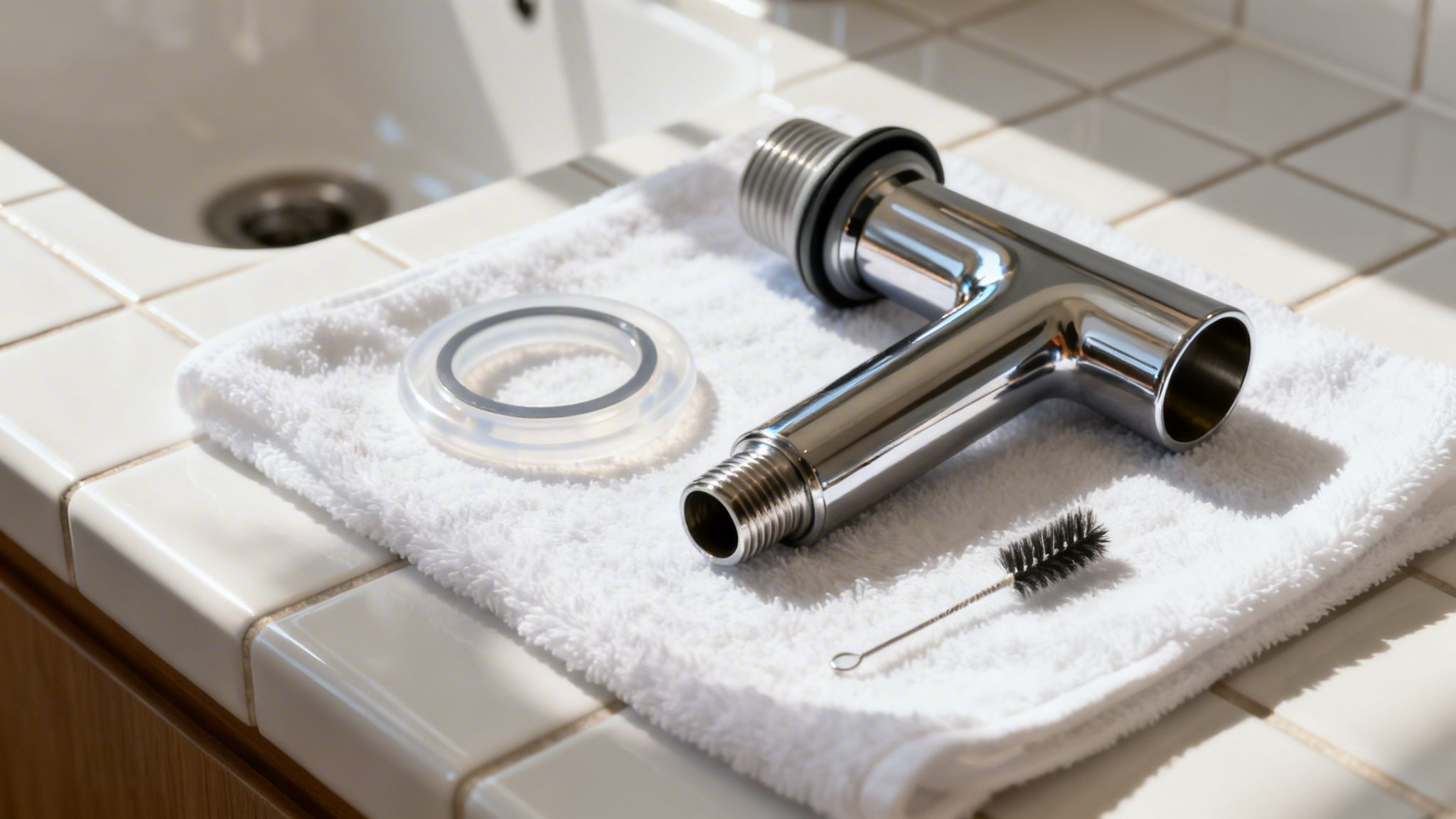
A sifon para cocinar is one of the most versatile tools in a modern kitchen, but I've seen them go from a chef's best friend to their worst enemy in a single shift. Like any piece of high-pressure equipment, its performance and safety hinge entirely on how you treat it.
Cutting corners on cleaning doesn't just shorten the siphon's lifespan; it introduces real, serious risks into your kitchen. We're talking about everything from sudden equipment failure during a packed service to critical food safety breaches. A strict maintenance routine isn't just best practice—it's non-negotiable for any professional.
The Right Way to Assemble and Disassemble
Your first line of defence against accidents is simply putting the thing together correctly. Pay close attention to the silicone gasket inside the head. This small ring is all that stands between you and a high-pressure leak.
Before you even think about screwing the head on, give that gasket a quick inspection. Is it seated properly? Is it clean? Are there any tiny nicks or signs of wear? A compromised gasket is a ticking time bomb. When it's time to take it apart, release all the pressure first. No exceptions.
Never attempt to open a pressurised siphon. Always vent all remaining gas by pressing the lever until the hissing stops completely. This is the single most important safety rule.
A Rigorous Cleaning Protocol
Let's be blunt: leftover bits of cream, sugar, or fruit purée are a disaster waiting to happen. They don't just clog the delicate valve and nozzle, ruining the texture of your foam. They create a perfect breeding ground for bacteria.
A quick rinse under the tap won't cut it. Your cleaning process needs to be methodical.
- Complete Disassembly: After venting, take everything apart. The head, gasket, piston, and decorator tip all need to be separated.
- Thorough Washing: Grab that little brush that came with the siphon—it's not an optional extra. Use it to meticulously clean the inside of the piston and the dispensing valve. This is where clogs love to hide.
- Hot Water and Sanitiser: Wash every component in hot, soapy water. In a professional setting, a final dip in a food-safe sanitising solution is an absolute must.
- Air Dry Completely: Lay everything out to air dry before you put it back together. Trapped moisture is the enemy of a well-maintained siphon.
To keep your team on track, a simple checklist can make all the difference, turning good intentions into consistent habits.
Daily vs Weekly Siphon Maintenance Checklist
This simple framework helps any member of staff keep your siphons hygienic, safe, and ready for service.
| Task | Frequency | Why It's Critical |
|---|---|---|
| Full Disassembly & Wash | Daily (After Use) | Prevents bacterial growth and clogs from food residue. |
| Inspect Gasket for Damage | Daily | Ensures a proper seal to prevent dangerous pressure leaks. |
| Clean Nozzles & Piston | Daily | Guarantees smooth dispensing and prevents texture issues. |
| Deep Clean & Sanitise | Weekly | Provides a more thorough sanitation to eliminate any potential buildup. |
| Check for Thread Wear | Weekly | Worn threads on the head or canister can compromise the seal. |
By breaking it down like this, you ensure nothing gets overlooked during a busy week. A few minutes of daily care prevents hours of headache later on.
The Critical Importance of Certified Gas
Finally, let's talk about the gas itself. The quality of your nitrous oxide is just as important as the cleanliness of your siphon. You must only use certified, food-grade E942 nitrous oxide from a reputable B2B supplier.
I can't stress this enough: industrial-grade gas is not the same. It can contain machine oils and other impurities that will wreck your equipment and, more importantly, are completely unsafe to serve to customers.
Using the wrong chargers or uncertified gas from a questionable source is a gamble on your equipment, your reputation, and your customers' health. Partnering with a trusted supplier like Kings Canisters who provides fully certified products is the only way to operate. It’s the foundation of safety, compliance, and quality for every single dish and drink that leaves your kitchen.
Sourcing and Logistics for Hospitality Businesses
Let’s be honest. Getting a professional sifon para cocinar for your kitchen is the easy part. The real challenge, the one that separates the pros from the amateurs, is keeping it fed. For any serious hospitality business, sourcing food-grade nitrous oxide isn't a shopping trip; it's a critical piece of your entire operational strategy.
I’ve seen it happen more times than I can count: a brilliant menu, a packed house, and then… silence. The hissing stops. The signature foam on your bestseller is suddenly 86'd. Running out of N2O mid-service doesn't just slow you down; it can bring your entire creative output to a dead halt. This is precisely why savvy operators stop making last-minute buys and start building relationships with a dedicated B2B supplier who actually gets it.
Navigating Supply Chain and Regulatory Hurdles
Here in the Canary Islands, "logistics" is a whole different beast. Getting anything from the mainland means wrestling with customs, navigating specific transport rules, and bracing for delays that can completely derail your service. A local supplier who handles that entire headache—from the port paperwork to compliant storage and delivery—isn't just a vendor; they're a lifeline.
Professionalism is another non-negotiable. A legitimate supplier will operate on a strict B2B model, meaning they'll ask for your business credentials (your CIF/NIF) before they sell you a single cylinder. This isn’t about being difficult; it’s about accountability. It ensures a high-pressure gas is sold for its intended culinary purpose, protecting everyone involved.
Then there’s the paperwork. For any business here, getting an IGIC-ready invoice isn’t just a nice-to-have; it's fundamental for clean, audit-proof books. When a supplier provides this without you having to ask, it’s a clear sign they understand the local landscape.
Partnering with a supplier who handles island-specific logistics and provides compliant documentation transforms a simple vendor relationship into a strategic operational advantage. It frees you up to focus on your craft, not on navigating bureaucracy.
Forecasting Usage and Controlling Costs
To get a grip on your inventory and budget, you have to know what you’re getting out of each cylinder. It’s the only way to forecast your consumption, stop shortages before they happen, and nail down your cost per serving. Those little 8-gram cartridges might be fine for home kitchens, but in a commercial setting, they're a fast way to burn through money and time.
This is where the bigger cylinders come in. They’re built for professional volume and offer far better value. Here’s a quick rundown to help you plan your supply:
- Small Cartridges (8g): Think of these for very occasional use. One cartridge will typically charge a 0.5-litre siphon once. The cost per litre of finished product is incredibly high.
- Medium Cylinders (580g-670g): This is a serious step up. A single 670g cylinder can do the work of over 80 individual cartridges. It's the sweet spot for most bars and medium-sized restaurants, massively cutting your cost-per-use and the time spent swapping out chargers.
- Large Cylinders (2kg / 2.2L): The absolute workhorse for high-volume venues. One 2kg cylinder replaces roughly 250 standard cartridges, delivering the best possible cost-efficiency and keeping service interruptions to a minimum. It’s the go-to for busy hotels, large-scale catering, and bustling nightclubs.
Once you calculate your average weekly or monthly usage, you can pick the cylinder size that actually matches your reality. This data-driven thinking turns a chaotic expense into a predictable line item on your budget—a foundational step for any business serious about growth. If you need help figuring this out, you might be interested in learning how to open a wholesale account with Kings Canisters.
Ultimately, choosing a supplier isn't about chasing the lowest price. It’s about finding a partner who shores up your operation and helps you grow. A real B2B wholesaler delivers certified products, seamless logistics, and the kind of operational backup that lets your business thrive.
Local Business Information
For hospitality professionals located in the Canary Islands seeking a reliable, local supplier of culinary-grade N2O, Kings Canisters is your dedicated partner. We provide:
- Certified Food-Grade N2O: E942 gas in various cylinder sizes (640g, 2.2L) to match your volume needs.
- Island-Wide Logistics: We handle all import, customs, and delivery logistics, ensuring a consistent supply to your door.
- B2B Professional Service: We work exclusively with businesses, providing IGIC-compliant invoicing and professional account management.
Contact Us: Simplify your supply chain and focus on your craft. Visit Kings Canisters to learn more or open an account today.
Frequently Asked Questions
If you’re just getting to grips with a professional sifon para cocinar, you probably have a few questions. I’ve seen these same queries come up time and again with chefs and bar managers across the islands. Here are the straight answers, based on years of seeing what works—and what doesn’t—in a busy service environment.
How Much Can I Actually Make from One N2O Cartridge?
This is a numbers game, and the answer directly impacts your bottom line. As a baseline, a small 0.5-litre siphon with a single 8g N2O cartridge will puff up to about 1.5 litres of foam. It’s fine for a few plates, but it’s not a serious commercial solution.
For any professional setup, you have to think bigger. A 670g cylinder, for instance, contains the equivalent of more than 80 of those tiny cartridges. The maths is simple: switching to larger cylinders slashes your cost per portion and, just as importantly, stops your team from fumbling with small chargers during a busy service.
I’ve watched countless businesses leak profit by relying on small, retail-style cartridges. The single most effective change a high-volume venue can make is to match its gas supply to its output. Upgrading to professional cylinders isn’t just about convenience; it’s a core cost-control strategy.
Why Is My Foam So Runny?
This is, without a doubt, the most common frustration I hear about. A perfect, stable foam breaks down into a sad, watery puddle. It almost always comes down to one of three classic mistakes:
- Temperature: Your base liquid and the siphon itself must be ice-cold. I mean really cold. If you half-heartedly chill it, you’ll get a half-hearted foam. Make the fridge your best friend.
- Stabilisation: N2O needs something to grab onto. Without enough fat (like in a 35% whipping cream) or a binding agent like gelatine, agar-agar, or even egg whites, the gas bubbles will just escape.
- The Shake: This isn't a gentle rock; it's a vigorous shake. After charging, give it 5-10 powerful shakes. Still runny? Don’t be shy—give it another few shakes. That agitation is what builds the structure.
Can I Prep a Charged Siphon and Store It in the Fridge?
Yes, and you absolutely should. This is standard practice in every efficient kitchen I’ve worked with. Pre-charging siphons and keeping them in the walk-in is key to a smooth service.
A correctly charged and sealed siphon will keep its contents perfectly safe and ready to go for up to a week, especially dairy or perishable mixes. Just remember to give it a gentle shake before you use it each time to wake the mixture back up.