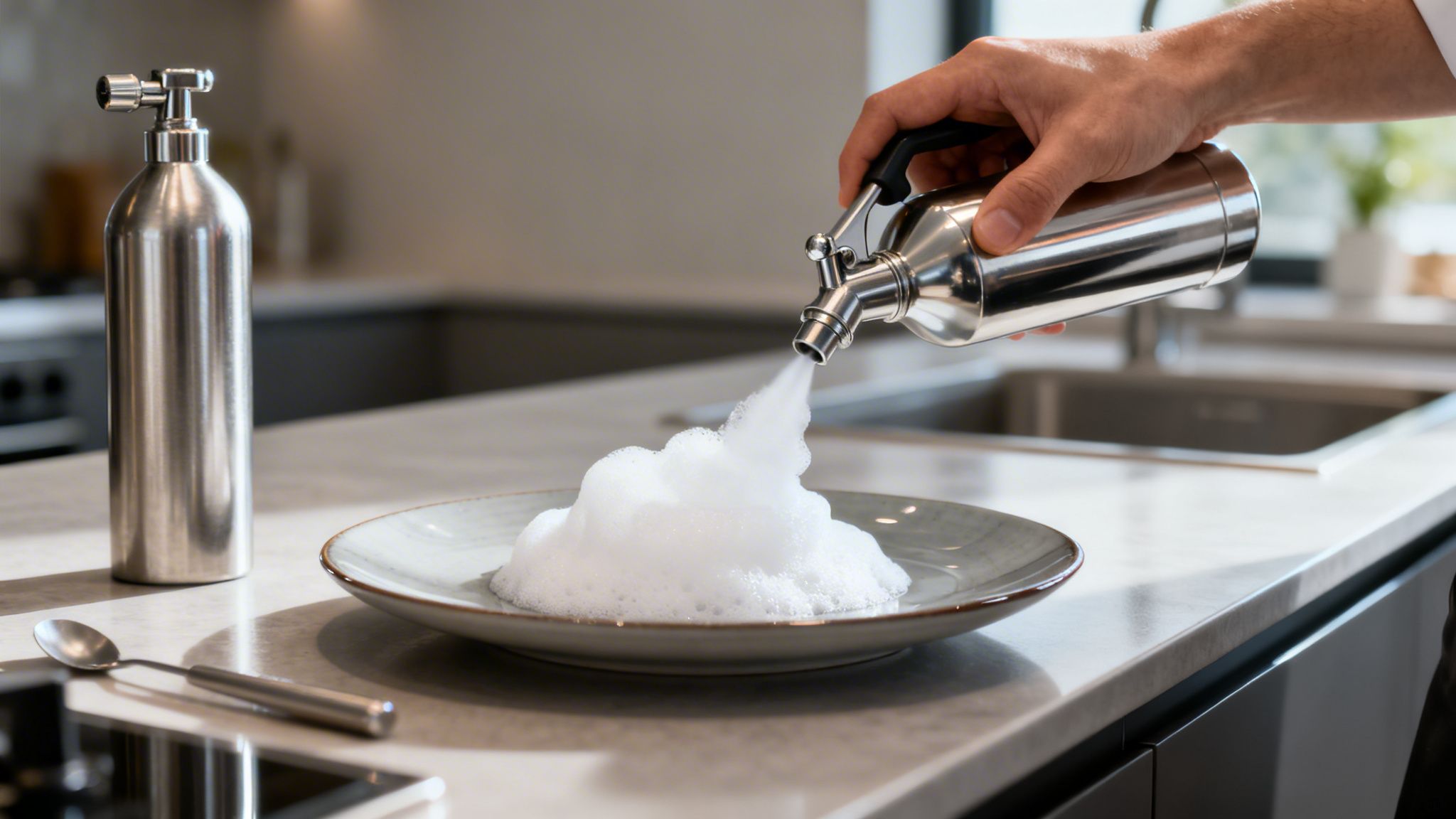

A Professional Guide to the Sifon Para Cocinar
Summary:
A "sifon para cocinar," or culinary siphon, is an essential tool in modern professional kitchens and bars, used to create light foams, mousses, and rapid infusions. By using pressurized, food-grade nitrous oxide (N₂O), it transforms liquids into airy textures, enhances flavors, and streamlines prep for high-volume service. This guide provides a practical overview of how siphons work, their professional applications, the critical importance of using certified E942 gas, and how to choose the right N₂O supply—from small cartridges to large cylinders—to optimize efficiency and cost. It offers actionable advice on safety, compliance, and supply chain management, particularly for businesses in high-demand markets like the Canary Islands.
Key Points:
- Functionality: A siphon uses pressurized nitrous oxide (N₂O) to aerate liquids, creating light foams and mousses by dissolving the gas into a base and then rapidly releasing the pressure.
- Key Applications: Essential for creating culinary foams (espumas), instant mousses, rapid flavor infusions for spirits and oils, and batching sauces for consistent, high-volume service.
- Gas Purity is Crucial: Only use certified E942 food-grade nitrous oxide with 99.9% purity. Industrial-grade gas contains impurities that can ruin flavor and pose health risks.
- Supply Options: While 8g cartridges are suitable for occasional home use, large-format cylinders (670g or 2kg) are far more cost-effective and efficient for professional venues, significantly reducing cost-per-charge and prep time.
- Safety and Compliance: Proper handling includes storing cylinders in a cool, ventilated area, securing them upright, and using certified products with proper B2B invoicing for audit-readiness.
Walk into any high-end kitchen or cocktail bar, and you'll likely spot a sleek metal bottle being used to create impossibly light foams and velvety smooth sauces. That's a sifon para cocinar, or culinary siphon, and it's one of the most versatile tools in modern gastronomy.
It’s not just for whipped cream. Think of it as a precision instrument that uses pressurised nitrous oxide (N2O) to instantly transform liquids, infusing them with flavour and giving them an ethereal texture that's impossible to achieve by hand. For a professional, it’s a gateway to elevating dishes and cocktails, setting your menu apart from the competition.
What Is a Sifon Para Cocinar and How Does It Work?
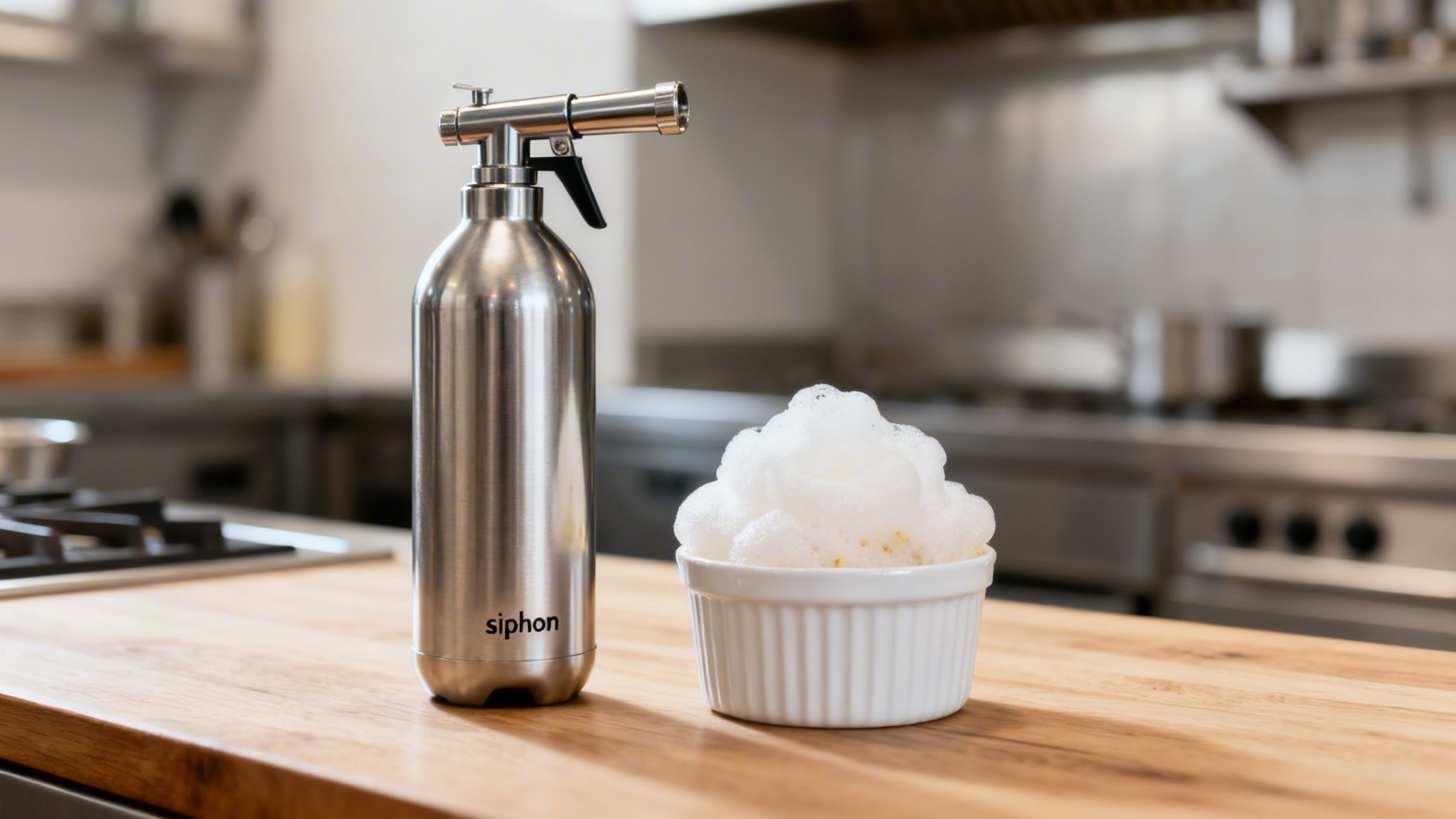
At first glance, a culinary siphon looks simple: a stainless steel bottle, a sealed head with a lever, and a small port for a gas charger. But inside, a bit of food science magic is happening. The process is straightforward—you fill the bottle with your liquid base, whether it’s a fruit purée, a delicate cream sauce, or a cocktail mix, and then charge it with food-grade nitrous oxide.
The real transformation begins when you shake it.
The Science of Aeration
The secret lies in the gas itself. Nitrous oxide is incredibly soluble, especially in fats. When you charge the siphon and give it a good shake, the pressurised N2O gas dissolves completely into your liquid base, becoming one with it.
Then comes the moment of creation. When you press the lever, the pressure inside the bottle is suddenly released. The dissolved N2O expands in an instant, forming millions of tiny, stable bubbles throughout the liquid. This is what turns a dense base into a perfectly light, airy foam or espuma.
A sifon para cocinar is far more than a simple gadget. It's a tool for consistency. It gives a chef or bartender a level of control over texture that you just can't get by hand, turning basic ingredients into signature creations night after night.
An Essential for High-Volume Venues
In any busy professional kitchen, speed and consistency are everything. That's where the sifon para cocinar truly proves its worth. It’s a workhorse for:
- Creating Foams and Mousses: Add a delicate potato foam to a signature tapa or finish a dessert with a rich, instant chocolate mousse.
- Rapid Infusions: Infuse spirits with fresh herbs or oils with spices in a matter of minutes. This technique cuts down a process that used to take days into a task you can do mid-service.
- Streamlining Prep: Prepare large batches of sauces, batters, or creams ahead of a busy shift, keeping them fresh and ready for instant, consistent dispensing.
The demand for these siphons, and the reliable nitrous oxide supply they depend on, is booming, especially in high-traffic tourism hotspots. Take the Canary Islands. Across Tenerife, Gran Canaria, Lanzarote, and Fuerteventura, the siphon has become a cornerstone of modern hospitality.
In these bustling markets, we’re seeing high-volume venues prepare an average of 4,500 culinary lines every single day. During peak season in Tenerife, nightlife operators serving up to 50,000 visitors a week see their siphon usage jump by 40%. A single 2kg canister of N2O can consistently yield over 500 whipped charges, making it vital for service continuity. You can see a full breakdown of this trend in the Canary Islands hospitality sector in this detailed report. It’s clear the siphon isn't just a tool anymore—it's a critical piece of operational hardware.
What’s Actually Happening Inside Your Culinary Siphon?
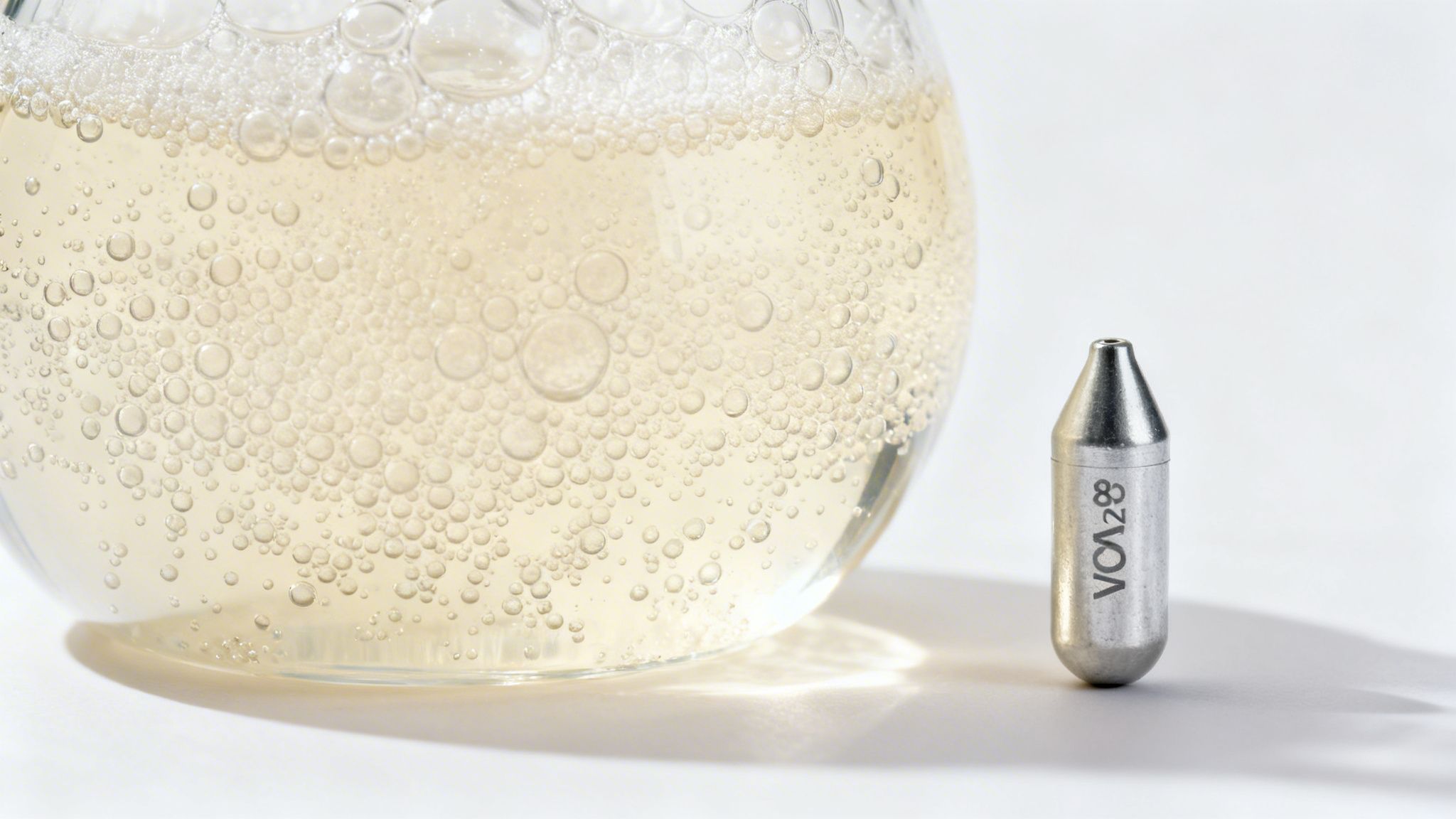
To really get the most out of a sifon para cocinar, you need to understand what's going on under the hood. It’s not some culinary black magic; it's a straightforward bit of physics that puts you in complete control of texture. The workhorse here is food-grade nitrous oxide (N₂O), a gas with a few unique tricks up its sleeve.
When you charge the siphon, you’re forcing pressurised N₂O into your liquid base. Here’s the key part: the gas immediately starts dissolving into the liquid. N₂O is incredibly liposoluble, which is just a technical way of saying it loves to dissolve in fat. This is why high-fat liquids—heavy cream, coconut milk, even oil-based emulsions—give you those rich, unbelievably stable foams.
The Power of Pressure and Expansion
Think about it like a bottle of soda. CO₂ is forced into the water under pressure, staying invisible until you pop the cap. The sudden pressure drop lets the gas escape, creating fizz. A culinary siphon uses the same principle, but with much more precision and a different outcome.
Once you’ve shaken the siphon to get the N₂O fully incorporated, you pull the trigger. That lever-press causes a massive, instant drop in pressure inside the canister. The N₂O that was dissolved in the liquid has nowhere to go but out, and it expands violently, creating millions of tiny, uniform bubbles. It’s these micro-bubbles that transform a heavy liquid into a light-as-air foam or a silky espuma.
The secret to the siphon’s incredibly light texture is the rapid expansion of nitrous oxide. That instant shift from high pressure to low pressure creates a fine, stable bubble structure that you just can't get by whipping with a whisk.
Why N₂O and Not CO₂?
While both nitrous oxide and carbon dioxide (CO₂) are used to pressurise things in the kitchen, they have completely different jobs. If you're aerating anything delicate, N₂O is the only gas for the job.
- Flavour Neutrality: N₂O is basically tasteless and odourless. It does its work—aerating—without leaving any footprint on the flavour you’ve worked so hard to build.
- The Wrong Reaction: CO₂, on the other hand, creates carbonic acid when it mixes with water. That gives you the sharp, tangy "fizz" you want in a soda, but it will absolutely destroy the flavour of a delicate chocolate mousse or a classic hollandaise.
This is the fundamental reason a sifon para cocinar uses N₂O for foams, while a soda siphon is built for CO₂ and carbonation. Grab the wrong gas, and you’ve ruined the dish before it even hits the plate.
The Purity Factor is Non-Negotiable
For any professional, ingredient quality is everything. That principle has to extend to the gas you use. It's critical to only use E942 food-grade nitrous oxide certified at 99.9% purity. Anything less, like industrial-grade N₂O, is a massive risk.
Lower-grade gas is often contaminated with industrial lubricants, metallic oils, and other chemical residues from the manufacturing process. These impurities don't just add an unpleasant, greasy mouthfeel; they can introduce a chemical smell that taints the entire dish. Using impure gas completely undermines your work, compromising both flavour and safety.
We’ve written extensively about the importance of certified nitrous oxide because it's a detail that separates the professionals from the amateurs. When you insist on certified pure N₂O, you’re guaranteeing that every single plate you send out is clean, consistent, and exactly what you intended it to be.
Professional Applications for the Kitchen and Bar
A sifon para cocinar in a professional kitchen or bar isn’t just another gadget; it’s a workhorse. For chefs, bartenders, and caterers, getting to grips with a siphon is what separates a good menu from a great one. It’s the secret to creating unique textures and flavours that get people talking, all while making service run smoother.
Let’s get practical and look at three core ways you can put a siphon to work right now. These aren’t just fancy tricks; they’re real-world techniques to elevate dishes, speed up complex prep, and craft drinks that justify a higher price point.
Elevating Culinary Creations with Foams and Mousses
The most common job for a culinary siphon is creating incredibly light, airy textures from what are usually dense, heavy bases. This is where a chef’s creativity can really shine, taking a familiar dish and turning it on its head. With a bit of practice, a simple purée is transformed into a delicate foam that adds a layer of flavour without weighing down the plate.
Think about what this could do for your menu:
- Delicate Potato Foam: A modern, elegant finish for a classic Spanish tapa. Imagine it topping patatas bravas or a hearty stew, adding a sophisticated touch.
- Decadent Chocolate Mousse: Prepared in minutes and dispensed to order. This guarantees a perfectly fresh, velvety texture for every single dessert, even in the middle of a chaotic service.
- Savoury Vegetable Espumas: A bright beetroot or bell pepper foam can add a pop of vibrant colour and an intense burst of flavour to grilled fish or meat dishes.
The real win here is consistency and speed. A siphon lets your kitchen produce perfectly aerated mousses and foams on demand. You completely sidestep the time and labour of hand-whipping, and every plate that goes out has the exact same quality.
This is all about making the everyday memorable. A stable, flavourful foam can transform a standard soup into something special or provide the visual flair that makes a dessert an instant hit on social media. For more ideas on how pros are using them, check out our guide on what cream chargers are used for in bars and restaurants.
Transforming Your Bar with Advanced Cocktail Techniques
For any bar that takes its cocktail programme seriously, the siphon is a game-changer. It gives bartenders two huge advantages: the ability to create unique textures with espumas and a way to slash infusion times from days to minutes. I’ve seen it allow bartenders to build incredibly complex, layered drinks with surprising speed.
Think about the impact on your bar’s menu:
- Crafting Silky Espumas: Take a classic Pisco Sour or Margarita and top it with a light, citrus-infused foam instead of the usual egg white. It adds a stunning visual layer and a silky mouthfeel that completely elevates the drink.
- Executing Rapid Infusions: The intense pressure inside a siphon literally forces liquid into the cells of solids like herbs, fruit, or spices. This means you can create a rosemary-infused gin or a chilli-spiked tequila in just a few minutes, not days or weeks.
That rapid infusion technique opens up so much room for creativity. A bartender can whip up a special infused spirit for a "cocktail of the day" during their morning prep, without needing to plan weeks ahead. It’s a powerful way to build a reputation for innovative, high-quality cocktails that no one else has.
Streamlining High-Volume Prep for Catering and Events
In a high-pressure environment like catering or a busy hotel kitchen, prep is everything. The sifon para cocinar becomes an indispensable tool for batching large volumes of sauces, creams, and toppings, keeping them perfectly stable and ready for service.
I’ve found this especially useful for holding things that are notoriously tricky, like emulsions. A big batch of hollandaise sauce, for example, can be made, loaded into a siphon, and held in a warm water bath. It can then be dispensed flawlessly onto each plate, staying light and emulsified without ever breaking. Likewise, you can prep huge amounts of whipped cream hours before an event, store it in siphons, and dispense it with perfect consistency every time. This is a massive stress-reducer during service and guarantees every guest gets the same high-quality result.
A quick-reference guide can help spark some ideas for how a siphon can fit into your specific business model.
Siphon Application Ideas for Hospitality Venues
Ultimately, these applications show how a simple tool can solve real-world business problems—from enhancing creativity and customer experience to tackling the nitty-gritty challenges of speed and consistency in a professional kitchen.
Choosing Your N₂O Supply: Cartridges vs. Large Cylinders
For any professional in hospitality, picking the right nitrous oxide supply isn't just an inventory choice—it's a core business decision. It has a direct line to your cost-per-serve, your team's speed during a rush, and ultimately, your bottom line. The two main paths are the old-school 8g single-use cartridges and the modern, large-format cylinders, like our 670g or 2kg tanks.
Making the right call means looking past the sticker price of a single box or tank. You have to analyse the real cost and efficiency over hundreds or thousands of serves. A busy bar or kitchen needs a supply that's economical, fast, and dead-on reliable, especially when the orders are flying in.
The Metrics That Actually Matter
When you get down to it, the debate between cartridges and cylinders boils down to a few critical factors that can make or break a shift. I’ve seen venues save thousands, and others waste just as much, by getting this choice right or wrong.
Here’s what you should be looking at:
- Cost-Per-Charge: The hard cost to pressurise a single one-litre siphon.
- Total Yield: How many siphons can you actually prep before you need to restock?
- Prep Speed: The real-world time and labour spent charging those siphons.
- Waste Generation: The physical mountain of empty steel you're left with.
- Storage Footprint: The valuable shelf space needed to hold your supply.
For someone making whipped cream at home once a month, small cartridges might be fine. But for a professional venue using a sifon para cocinar dozens of times a day, the maths tells a completely different story. The financial and workflow benefits of bulk cylinders become impossible to ignore pretty quickly.
The cooking siphon is far more than a one-trick pony, and its versatility is key to understanding its value in a professional setting.
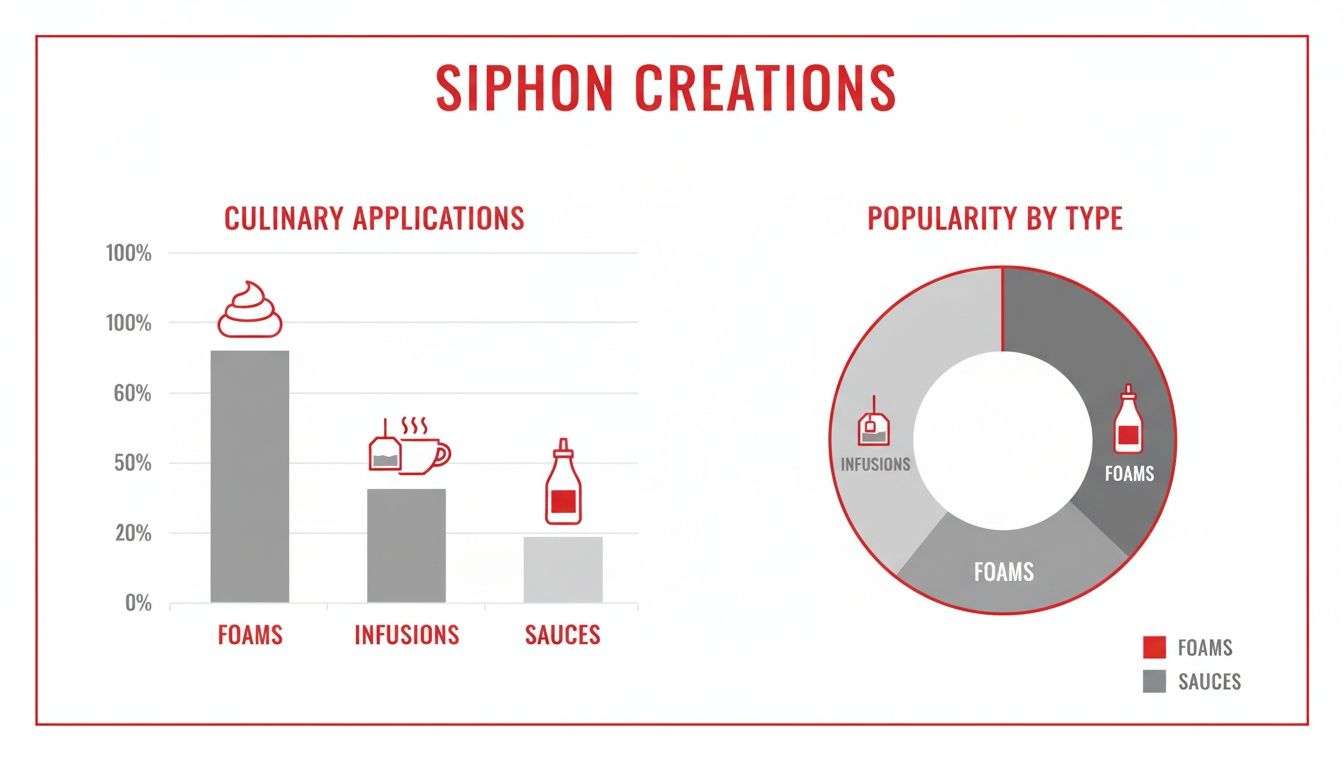
As you can see, this isn't just about foams. It's an essential tool for rapid infusions, velveteen sauces, and creative cocktails—all things that suffer when your prep process is slow and clunky.
The Clear Advantage of Going Big
Let's run a quick, practical scenario. Imagine your team needs to prep 20 siphons for a wedding reception. With 8g cartridges, that means unwrapping, screwing in, charging, and discarding 20 individual steel bulbs. It’s a repetitive, messy task that grinds your workflow to a halt.
Now, picture the same task with a large cylinder connected to a hose and regulator. You charge all 20 siphons, one after the other, in just a few minutes. A tedious job becomes a streamlined, almost effortless part of your prep.
I’ve had chefs tell me that for a high-volume operation, large cylinders aren't just an alternative; they're a strategic necessity. The reduction in cost-per-charge can be as high as 50% or more, and the time saved is labour you can put toward something far more creative.
To make it even clearer, let’s put the two supply methods head-to-head. This table breaks down what you can expect in a real-world kitchen or bar environment.
N₂O Supply Comparison: Small Cartridges vs. Large Cylinders
The data speaks for itself. For any venue that uses a sifon para cocinar on the regular, making the switch to large-format cylinders is one of the smartest moves you can make to slash operational costs and boost your team's efficiency.
A single 2kg cylinder, for instance, holds the same amount of N₂O as 250 individual 8g cartridges. Think about that: no more mid-service panics, simpler inventory, and less waste. You can dive deeper into the numbers in our detailed comparison of 580g vs 2kg N₂O cylinders. Ultimately, this shift frees your team up to do what they do best: creating incredible experiences for your guests.
Ensuring Safety Compliance and Proper Storage
Working with pressurised gas like nitrous oxide is just another part of the job in a professional kitchen or bar. But let's be clear: handling N₂O cylinders for your sifon para cocinar demands a serious, no-nonsense approach to safety and regulation. Getting it right isn't complicated, but it is non-negotiable.
This isn’t about adding red tape to your workflow. It's about building a professional, safe, and bulletproof operation. Simple, repeatable habits for handling and storage are the foundation of any well-run venue. They ensure this powerful culinary tool remains an asset, not a liability that could cost you your staff, your customers, or your business.
Essential Safety Protocols for Handling N₂O
My experience has taught me that safety begins with respect. A pressurised gas cylinder, no matter the size, isn't something to be treated casually. A moment of carelessness can lead to damaged equipment or, worse, injury. Every single team member who touches an N₂O cylinder needs to have these core principles drilled into them until they're second nature.
Here are the non-negotiables for handling:
- Temperature Control: Keep cylinders out of direct sunlight and away from heat sources—ovens, grills, you name it. The ideal storage spot is cool and dry, kept below 30°C. Heat cranks up the internal pressure, and that's a risk you don't need.
- Proper Ventilation: The storeroom must be well-ventilated. In the rare case of a slow leak, this prevents gas from building up and keeps your air quality safe. It's a simple check that costs nothing.
- Secure Storage: Always store cylinders upright and secured. Chain them to a wall or use a proper storage rack. The last thing you want is a tank getting knocked over and damaging the valve during a busy service.
- Gentle Handling: Never, ever drop, roll, or drag cylinders. Use a trolley for the larger tanks. It prevents damage and saves your staff's backs.
Following these rules is your first line of defence. It’s a set of habits that, once established, minimises risk so you can focus on the food and drink, not on potential accidents.
Regulatory Compliance and Audit-Ready Documentation
Beyond the physical side of safety lies the paperwork. When a health and safety inspector walks in, they expect to see that you're using products that are legal, certified, and fit for purpose. For a sifon para cocinar, that means one thing: using food-grade E942 nitrous oxide. Period.
I've seen operators try to cut corners with industrial-grade gas, and it's a huge mistake—not just for flavour quality but for compliance. To stay audit-ready, you have to partner with a supplier who gives you the proper certifications. Look for products with ISO 9001, CE, and local health authority approvals (like AESAN in Spain). These aren't just logos; they're your guarantee that the gas is 99.9% pure and made for human consumption.
Just as critical is having your B2B documentation in order. Every single delivery needs a clean, compliant invoice. For our partners in the Canary Islands, this means getting IGIC-ready invoices that detail the transaction correctly. Having this paperwork organised and ready to go shows professionalism and ensures you're always prepared for an audit. For a deeper dive, you can explore more about nitrous oxide compliance and logistics for hospitality in our dedicated guide.
By locking down both your physical safety habits and your documentation, you build a framework that is secure and professional. It’s the kind of diligence that lets owners and managers sleep at night, knowing the business is protected on all fronts.
Optimising Your Supply Chain in the Canary Islands
Running a hospitality business in the Canary Islands isn't like operating on the mainland. I've seen firsthand how the unique logistics—inter-island transport, customs, and the sheer pressure of tourist season—can cripple an unprepared venue. When your sifon para cocinar runs dry during the high season, it’s not just a hiccup; it’s a direct hit to your revenue.
Mastering your procurement here is non-negotiable. It demands a strategy built on local knowledge and a supply partner who genuinely gets the hurdles of island commerce. Simply clicking "order" on a mainland supplier's website often leads to a familiar story of delays, surprise costs, and service failures at the worst possible time.
The Real Value of a Local Distributor
I can't stress this enough: partnering with a dedicated local distributor is the best way to shield your business from supply chain chaos. A partner with a real footprint across Tenerife, Gran Canaria, Lanzarote, and Fuerteventura offers more than just delivery; they provide a logistical safety net. They handle all the frustrating backend work, from customs clearance to compliant storage.
This on-island presence translates into real, tangible benefits for your day-to-day operations:
- Same-Day Delivery: Got a surprise rush? You can't afford to wait days. A local partner can get you restocked in hours, turning a potential crisis into a non-issue.
- Consistent Stock Levels: An island-based supplier knows the local rhythm. They hold inventory onshore, ensuring you always have access to what you need, even when the islands are at full capacity.
- Expert Handling: They manage the logistical headaches, including IGIC compliance and the safe transport of pressurised goods between islands, so your orders arrive safely and legally.
For any venue in the Canaries, a local distribution partner isn't just a supplier—they're an extension of your operations team. Their reliability becomes your reliability, letting you focus on your guests, not your inventory.
Driving Down Costs with a Distributor Programme
For any high-volume operation, procurement costs are a constant focus. A distributor programme is designed specifically for this, offering serious cost reductions for businesses buying N₂O cylinders in bulk. By establishing a consistent purchasing relationship, you unlock better pricing that goes straight to your bottom line.
This is more than a simple discount; it's a strategic framework for predictable, lower-cost sourcing. I've worked with high-volume bars, hotels, and catering companies who, by joining a distributor programme, have cut their annual N₂O spending by 33% or more. That's a huge saving you can put back into growing other parts of your business.
Stabilising Operations and Protecting Your Revenue
At the end of the day, optimising your supply chain is all about stability. A reliable stock of N₂O for your sifon para cocinar means your kitchen and bar can deliver, every single time. No more last-minute panic, no telling customers their favourite dessert is off the menu, and no 86-ing a popular cocktail because a key ingredient is missing.
When you secure a partnership with a trusted local distributor, you're protecting your revenue. You’re guaranteeing that the tools you need to innovate and impress are always within reach. To dig deeper into managing supply for a busy venue, check out our pro's guide to nitrous oxide tanks for Canary Islands venues, which offers more detailed insights. It’s how you turn a logistical challenge into a genuine competitive advantage.
Local Business Information: Your N₂O Supplier in the Canary Islands
For hospitality businesses across Tenerife, Gran Canaria, Lanzarote, and Fuerteventura, a reliable local partner is essential. Kings Canisters is a premier B2B distributor of high-quality, food-grade N₂O cylinders and accessories. We understand the unique demands of the island market and provide a logistical advantage to keep your venue running at peak performance.
- Business Name: Kings Canisters
- Service Area: Canary Islands (Tenerife, Gran Canaria, Lanzarote, Fuerteventura)
- Services: B2B distribution of certified E942 food-grade nitrous oxide (N₂O) cylinders (670g, 2kg), siphons, and accessories.
- Key Offerings: Same-day delivery, competitive distributor pricing, IGIC-compliant invoicing, dedicated local support.
- Contact: Visit our website to learn more about our products and distributor program.
Frequently Asked Questions (FAQ)
Even the most seasoned chefs and bartenders have questions when dialling in their techniques. I've spent years talking to professionals across the Canary Islands, and the same queries pop up time and again.
Here are the straightforward, practical answers to the most common questions I get about the sifon para cocinar.
How Many Charges Can I Expect from a Large N2O Cylinder?
The real question here is about efficiency during a busy service. The yield from a large N₂O cylinder is a game-changer compared to the old 8g cartridges.
As a solid professional benchmark, a single 670g cylinder will comfortably charge a 1-litre siphon around 80 to 85 times. Step up to a larger 2kg cylinder, and you’re looking at well over 200 charges for that same siphon.
This is precisely why you see high-volume bars and kitchens moving away from small chargers almost entirely. The numbers just make sense—it eliminates the constant need to restock during the weekend rush, saving both time and money.
Why Is Using Certified Food-Grade E942 Gas So Important?
This is a point I can't stress enough: using certified E942 food-grade nitrous oxide is non-negotiable, both for safety and for the quality of your end product.
The E942 certification is your guarantee that the gas is 99.9% pure. It confirms the gas is completely free from the industrial gunk—like machine oils or metallic residues—that often contaminates lower-grade, non-food-safe gas.
I've seen it happen. Using the wrong gas can introduce a harsh chemical flavour or an oily mouthfeel that will completely destroy the clean taste of a delicate foam, a premium sauce, or a carefully balanced infusion.
For a professional, your reputation is built on the quality of every single plate and cocktail you serve. Using anything less than certified E942 is a direct risk to your product, your customers' health, and your business's compliance with health regulations.
Can a Sifon Para Cocinar Be Used for Hot Preparations?
Absolutely, and it's one of its most versatile features. Most professional-grade stainless steel siphons are built to handle both hot and cold applications.
This allows you to create warm, light sauces—think of a delicate hollandaise or a savoury vegetable foam—and hold them at a stable temperature. Just place the siphon in a bain-marie (water bath) at up to 75°C (165°F).
A word of caution: always double-check your specific model's manual for its maximum temperature rating. And never, ever heat the siphon directly on a stove. A water bath is the only safe way to maintain a gentle, consistent temperature, keeping your sauces perfect and ready for plating during a hectic service.
What Is the Correct Way to Clean and Maintain a Siphon?
Proper cleaning isn’t just about hygiene; it's about protecting your investment and ensuring your siphon works perfectly for years. A dirty siphon can harbour bacteria and, worse, lead to dangerous blockages.
Here’s the breakdown I give to every new kitchen I work with. Follow these steps after every single use:
- Release All Pressure: Before you even think about opening it, make sure every bit of gas is expelled. Press the lever until the hissing stops completely. Never attempt to unscrew the head of a pressurised siphon.
- Disassemble All Parts: Unscrew the head and take everything apart: the gasket (the rubber seal), the valve, and the decorating tip. That little cleaning brush that came with your siphon? Use it. It’s designed for the small, hard-to-reach parts.
- Wash Thoroughly: Clean every component with warm, soapy water. If you’ve been working with fats, a bottle brush is your best friend for cleaning the inside of the canister. While most stainless steel siphons are dishwasher-safe, it's always smart to check the manufacturer's instructions first.
- Dry and Store: Let all the parts air dry completely before you put them back together. To preserve the gasket and prevent moisture buildup, store the siphon with the head removed or only loosely attached.
This simple, regular routine ensures every preparation is hygienic and your equipment stays in peak condition.
For hospitality businesses in the Canary Islands seeking to secure a reliable, compliant, and cost-effective supply of food-grade N₂O, Kings Canisters is your dedicated B2B logistics partner. We offer same-day delivery and a full range of certified products to keep your operations running smoothly. Explore our distributor programme and product portfolio at https://www.kingscanisters.com.