
What is N2O? A Practical Guide for Hospitality Professionals
Summary: This guide provides a practical overview of food-grade nitrous oxide (N2O), also known as E942, for professionals in the hospitality industry. It covers what N2O is, its culinary applications from whipped cream to rapid infusions, the critical differences between food-grade and industrial gas, and essential safety and sourcing information. We offer concise, actionable advice to help you use this tool efficiently, safely, and legally.
Key Points
- What N2O Is: In a professional kitchen, N2O refers to food-grade nitrous oxide (E942), a propellant and whipping agent used to create foams, mousses, and infusions.
- Key Applications: Its primary uses include making whipped cream with superior volume, creating light espumas from fruits and vegetables, and rapidly infusing flavors into spirits and oils.
- Safety & Purity: Only use certified E942 gas. Industrial-grade N2O contains contaminants that are dangerous to health, ruin flavors, and damage equipment.
- Sourcing Locally: For businesses in the Canary Islands, partnering with a local supplier is crucial for IGIC compliance, fast delivery, and avoiding logistical issues.
- Cylinder Choice: Large-format cylinders (e.g., 670g or 2kg) offer significant cost and time savings over small, single-use chargers in a professional setting.
For anyone in the hospitality trade, the term N2O doesn't mean laughing gas. It refers to one very specific thing: food-grade E942 nitrous oxide. This is the secret weapon you'll find in the best kitchens and bars, a tool that delivers speed, consistency, and a creative edge. It’s what allows top venues to produce perfect whipped cream, ethereal foams, and complex cocktail infusions in a matter of seconds.
What Is N2O and Why Your Kitchen Needs It
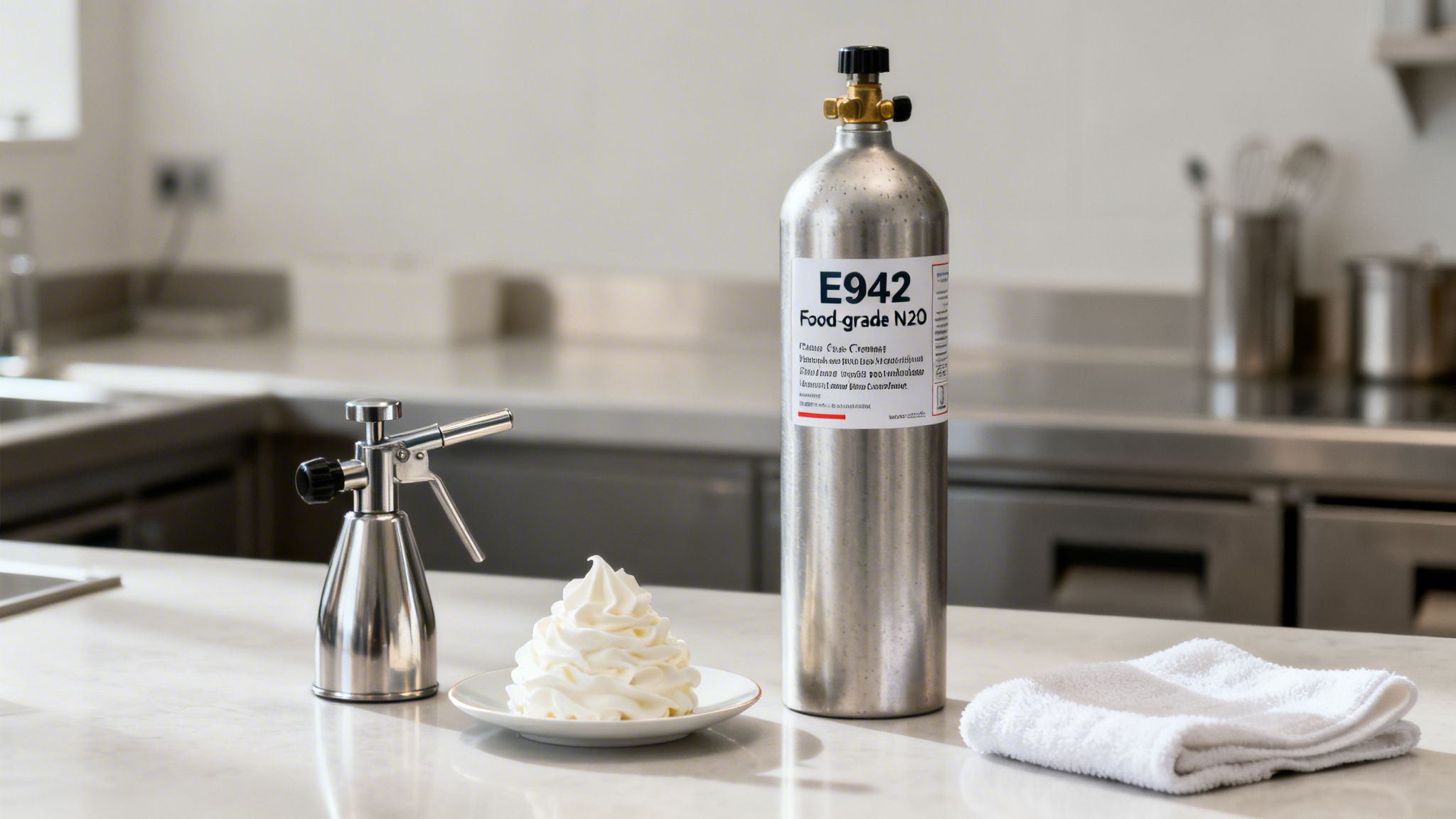
When you hear “n2o,” it's easy to think of its medical or industrial uses. But behind the bar or in a professional kitchen, N2O is a high-purity propellant and whipping agent with the food-additive code E942. This isn’t the stuff from a mechanic’s workshop; it's a carefully purified gas designed for one purpose: culinary excellence.
Nitrous oxide itself is a colourless gas with a faintly sweet smell. Its real magic, though, lies in a simple scientific property: it dissolves incredibly well into fats, but only under pressure. This is the entire principle behind its most famous application—making whipped cream.
The Science Behind the Speed
When you charge a cream dispenser with N2O, you're forcing the gas to dissolve into the fat globules within the cream. When you pull the trigger, the pressure inside instantly drops. The gas rapidly expands and escapes, turning the liquid cream into a stable, light, and perfectly textured foam.
This process is lightning-fast. More importantly, it’s four times more effective at creating volume than manually whipping air into cream. You get a better product, instantly.
In the fast-paced world of hospitality here in the Canary Islands—from a packed beach club in Tenerife to a fine-dining spot in Gran Canaria—that kind of efficiency isn't a luxury. It's a necessity. It’s a tool that guarantees consistency and speed, service after service.
Think of N2O not as a complex chemical, but as a time-saving asset. It empowers your team to deliver high-quality results consistently, even during the busiest hours, which boosts your efficiency and elevates the final product.
And it goes far beyond just cream. The same principle opens up a whole world of creative textures and flavours.
- Espumas and Foams: Create incredibly light, airy toppings from just about any fruit or vegetable purée.
- Mousses: Produce perfectly smooth, stable mousses without the arm-breaking work of traditional whipping.
- Rapid Infusions: Force the flavour of herbs, spices, or fruit into spirits or oils in minutes, a process that would otherwise take weeks.
For an even deeper dive into its applications, you can learn more about nitrous oxide and its various uses in our other articles. Once you understand what N2O really is, you start to see it for what it is: a key to unlocking greater creativity and efficiency in any professional kitchen or bar.
The Critical Difference: Food-Grade E942 vs. Industrial N2O
It’s a common mistake, but a dangerous one. While they share the same chemical formula, food-grade and industrial nitrous oxide are worlds apart. Using the wrong one isn’t just a simple mix-up; it's a huge risk to your customers, your equipment, and the reputation you’ve worked so hard to build.
Think of it like this: you wouldn't make a signature cocktail with cloudy water from an old industrial pipe, so why would you use gas that isn't purified for consumption? When it comes to the kitchen or bar, the only N2O that matters is E942.
This designation is your guarantee. It means the gas has been rigorously purified to meet strict food safety standards, making it the only option intended to come into contact with food and drinks. Industrial-grade N2O, on the other hand, is for automotive or manufacturing work. It’s full of impurities you don’t want anywhere near your menu.
Purity, Contaminants, and Why It Matters
The real difference comes down to purity. Food-grade E942 is refined to be at least 99.9% pure N2O. This intensive process strips away nasty residues left over from manufacturing, things you can't see but can definitely taste—and feel.
Industrial gas often contains:
- Industrial Lubricants: Oily, metallic-tasting substances from the machinery used to produce and compress the gas.
- Sulphurous By-products: These give off a foul, rotten-egg smell and can completely ruin the flavour profile of a delicate foam or infusion.
- Metallic Residues: Microscopic particles from production lines and unlined storage containers.
These contaminants aren't just bad for flavour. They can cause health issues for your customers, and the oily residues will destroy the delicate seals and valves inside your expensive cream dispensers. I’ve seen equipment fail for exactly this reason, and it’s a costly, entirely avoidable problem.
For any professional establishment, sourcing certified E942 is non-negotiable. It's a fundamental part of food safety and quality control, ensuring every dish or drink you serve is clean, safe, and tastes exactly how you designed it.
To help you quickly spot the differences, here’s a straightforward comparison.
Food-Grade E942 vs. Industrial N2O at a Glance
This table breaks down the essential distinctions every professional should know.
As you can see, the choice is clear. One is a precision tool for professionals; the other is a liability waiting to happen.
Certification: The Mark of a Professional Supplier
To guarantee this purity, reputable suppliers make sure their products carry the right certifications. These aren't just logos on a canister; they are your proof of quality, safety, and legality.
- E942: This is the official EU food-additive code for nitrous oxide. If a cylinder doesn't have it, it has no business being in your kitchen.
- ISO 9001: A global standard for quality management. It gives you confidence that every canister is produced with the same high level of care and traceability.
- CE Marking: This confirms the cylinder itself meets EU safety, health, and environmental protection rules. It shows the tank is built safely and is fit for purpose.
Understanding the legal side is just as important. For a deep dive into the specific rules here, check out our guide on N2O compliance and legality in the Canary Islands.
Ultimately, always checking that your supplier provides certified E942 protects your business from every angle—legally, financially, and most importantly, your reputation with every customer you serve.
Practical Uses from Whipped Cream to Rapid Infusions

Knowing the science is one thing, but seeing N2O work its magic during a busy service is something else entirely. For a professional kitchen or bar, food-grade nitrous oxide isn’t just a chemical; it’s a workhorse. It saves you time, guarantees consistency, and opens the door to menu ideas you might have thought were too complicated or time-consuming.
The most familiar job for N2O is, of course, making whipped cream. Hook up a dispenser to a large-format canister—like a 670g or 2kg cylinder—and you can turn out litres of perfectly light, stable cream in seconds. It completely removes the guesswork and arm-ache of whipping by hand or machine, so every dessert and coffee gets the exact same quality finish, even when the orders are flooding in.
Beyond the Classic Whipped Cream
Perfect cream is a non-negotiable, but the real game-changer is what else you can do with N2O. The same pressurisation that fluffs up cream can transform the texture and concentrate the flavour of countless other ingredients.
This is where you get into creating espumas and savoury foams. An espuma—Spanish for "foam"—is just a fancy name for an incredibly light, airy cloud of flavour made from puréed fruits, vegetables, or even cheese.
- Beetroot Foam: Adds an earthy, vibrant lift to a goat cheese salad.
- Parmesan Espuma: A savoury cloud that melts over a hot pasta dish, delivering intense flavour without the weight of a cream sauce.
- Mango & Passionfruit Foam: A light, tropical topping for desserts or a round of cocktails.
These foams give a dish an immediate visual upgrade, but more importantly, they deliver a pure, concentrated taste. It's one of the simplest ways I've seen a kitchen elevate a standard dish into a signature one.
The Bar's Secret Weapon: Rapid Infusion
For bartenders and mixologists, N2O provides a technique that feels like a shortcut from the future: rapid infusion. The process uses the intense pressure from nitrous oxide to literally force flavour from solids into liquids in a matter of minutes. A task that used to take weeks of patient steeping is now done before your service even starts.
This isn't just a time-saver; it’s a creative catalyst. Rapid infusion lets you capture the fresh, vibrant taste of local Canary Islands ingredients, creating unique spirits and syrups on demand for high-margin, one-of-a-kind cocktails.
Imagine creating a gin infused with fresh local herbs in under five minutes. Or a rum infused with coffee beans and cinnamon for an evening special. The process is dead simple:
- Put your liquid (vodka, gin, even oil) and your flavourings (citrus peels, chillies, spices) into a cream dispenser.
- Charge it with N2O, give it a shake, and let it sit for a minute or two.
- Carefully vent the gas and strain the liquid. It's now packed with flavour.
The pressure forces the liquid deep into the pores of the solid ingredients. When you release the pressure, the liquid rushes back out, dragging all that fresh flavour with it. It’s a technique that allows for the kind of experimentation and seasonality that was once impossible with slow, traditional methods. For a closer look at these techniques, you might be interested in our guide on what cream chargers are used for in bars and restaurants.
Safe Handling and Storage of N2O Canisters
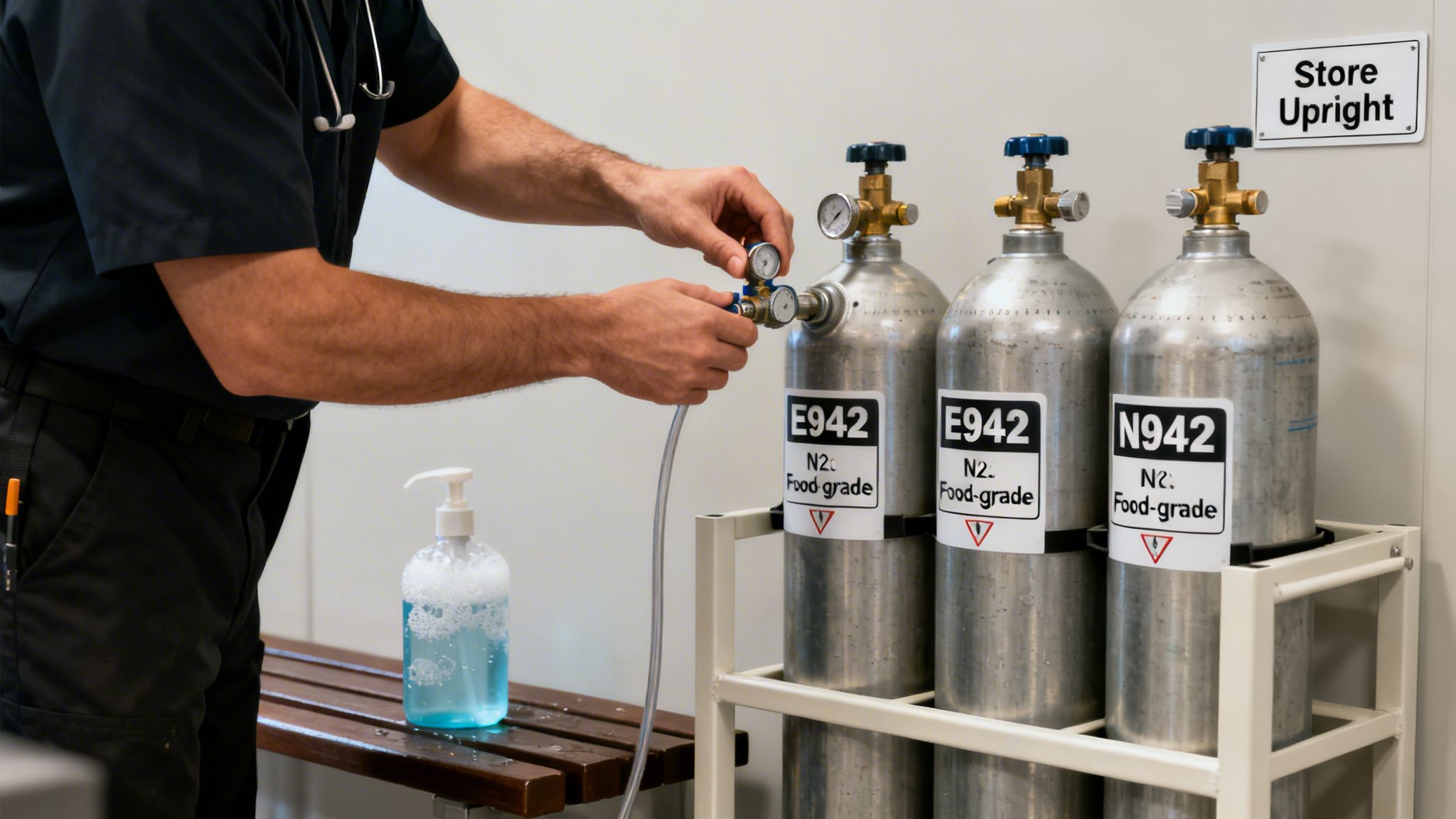
In a busy kitchen or bar, we treat our tools with respect. A sharp knife, a hot pan, a pressurised N2O cylinder—they all demand proper handling. While food-grade nitrous oxide is an incredible asset for creativity, the canister itself isn't something to be careless with.
Think of these guidelines as the unwritten rules every seasoned professional knows. They’re simple, commonsense protocols that protect your team, your equipment, and ultimately, your reputation. It’s less about chemistry and more about basic workshop discipline: treat every cylinder with care from the moment it arrives to the moment it’s empty.
Core Storage Rules
The single biggest factor in safe storage is the environment. An N2O cylinder is a container under pressure, and that pressure is sensitive to its surroundings, especially heat.
- Store Upright and Secured: Always keep canisters standing upright. We recommend securing them to a wall or a sturdy trolley with straps or chains. A tipped-over cylinder is a risk to the valve mechanism, which is the most sensitive part.
- Keep it Cool and Dry: Find a storage spot that is cool, dry, and well-ventilated. This means keeping it far away from direct sunlight, radiators, ovens, grills, or any other heat source.
- Avoid Flammable Materials: Never store N2O canisters next to flammable liquids like cooking oils or spirits, or other combustible materials. While N2O isn't flammable on its own, it’s an oxidiser, which means it can make an existing fire burn much more intensely.
A sudden temperature spike is the biggest risk to a stored N2O cylinder. A canister left in a hot car or next to a running oven is an accident waiting to happen. Maintaining a stable, cool environment is paramount.
Handling and Leak Detection
Proper technique when changing a cylinder is non-negotiable. When you attach regulators and hoses, the fit should be snug, but there's no need to overtighten and risk stripping the threads. A quick leak check every time you connect a new cylinder is a professional habit worth adopting.
It’s surprisingly simple. Just mix up a bit of soapy water and brush or spray it onto the valve connection after attaching your regulator. If you see new bubbles forming, you’ve got a small leak. Don't panic—just close the cylinder valve, detach the regulator, and check your connection again.
If you ever walk in and hear a loud hissing sound or notice the valve is freezing over, you likely have a more significant leak. The first step is always ventilation: open doors and windows to get air circulating immediately. Knowing the ins and outs of N2O compliance and logistics is key to running a safe and efficient operation.
Finally, always follow the proper procedure for returning your empty cylinders. They are designed for a circular economy—to be professionally refilled and recertified—and your supplier will have a specific process for collecting them.
A B2B Buyer's Guide to Sourcing N2O in the Canary Islands
Trying to source any professional gear in the Canary Islands has its own unique playbook, and food-grade nitrous oxide is no different. Getting a handle on the local logistics isn’t just about making sure your supplies turn up; it’s about making every purchase compliant, smart, and cost-effective. For any serious bar, restaurant, or hotel here, this isn’t just red tape—it’s how you run a sharp business.
I’ve seen it time and again: the most critical decision you’ll make is partnering with a local distributor. A supplier based on the mainland, or even in another country, simply can't grasp the realities of inter-island shipping, the nuances of customs clearance, or, most importantly, the IGIC tax system. A local partner is your guarantee that you'll get correctly formatted invoices with the proper IGIC breakdown, which is absolutely essential for your accounting and staying on the right side of any audit.
Navigating Local B2B Requirements
When you're buying E942 for professional use in the Canaries, there are a few non-negotiable hoops to jump through. These rules aren't there to make life difficult; they exist to create a clear, traceable supply chain for food-grade products. It's a system that verifies the N2O is destined for legitimate culinary use within a registered business.
The main thing you'll need to provide for every single order is your business identification.
- CIF (Código de Identificación Fiscal): This is what you'll use if you're a registered company (like an S.L. or S.A.).
- NIF (Número de Identificación Fiscal): This is for self-employed professionals (autónomos).
This isn't optional. It's mandatory for any reputable supplier to issue a valid B2B invoice. Without it, they simply can't complete the sale. It’s a straightforward step that legitimises the whole transaction and keeps your operation fully compliant with local commercial law.
The Strategic Value of Same-Day Delivery
One of the single biggest advantages a truly local supplier offers is same-day delivery. In the high-octane tourist hubs of Tenerife and Gran Canaria, running out of a key ingredient mid-service is the kind of disaster that costs you money and reputation. Same-day delivery services completely eliminate that risk, letting you run a much leaner, just-in-time inventory model.
For many venues I work with, same-day delivery means they no longer have to sacrifice valuable back-of-house space to store big, heavy gas cylinders. It frees up both physical room and the cash that would otherwise be tied up in surplus stock.
Think about it. Instead of dedicating a corner of your storeroom to a compliant storage area—which needs to be cool, well-ventilated, and secure—you can let your distributor hold the stock for you. You just order what you need, right when you need it, and it shows up in a matter of hours. This streamlined approach is a massive win, especially for smaller venues or those looking to run a tighter, more efficient operation. It directly means less risk, better cash flow, and more space for things that actually make you money.
Finally, if you're a high-volume venue, it’s always worth asking about distributor programmes. These kinds of partnerships can often slash your per-unit cost by 33% or more. They offer huge savings and simplify your supply chain even further with scheduled, recurring deliveries. For any business asking, "n2o que es" in a professional sense, understanding these local logistics is the real key to sourcing it the right way.
Cylinder Sizes and Certifications: What Actually Matters
When you’re buying N2O for your venue, it really boils down to two things: getting the right size for your workflow and understanding what the labels on the tank actually mean. Get these right, and you're not just buying gas; you're making a smart investment in efficiency and safety.
For any professional kitchen or bar, the choice of cylinder size is less about the gas itself and more about managing your time during a busy service. The conversation quickly moves away from those tiny, single-use cartridges to larger, more practical formats like 670g or 2kg cylinders. Frankly, anything smaller is a false economy in a commercial setting.
Think about it this way: a standard 8g charger gives you just enough whipped cream for a couple of desserts. It’s a workflow killer. In contrast, a single 2kg cylinder of E942 can produce hundreds of litres of whipped cream, doing the work of over 250 of those fiddly little cartridges. This isn't just a minor upgrade; it's a fundamental shift in how your team operates, saving countless hours and drastically cutting down on waste. We break down the maths in our guide on 580g vs 2kg N2O cylinders.
Why Certifications Are Your Only Real Guarantee
Once you've settled on a size, the certifications are the next thing you need to check. They aren't just logos; they are your proof that you're buying a safe, legal, and pure product. I’ve seen what happens when businesses cut corners here, and it's never worth the risk.
These are the three you need to look for:
- ISO 9001: This tells you the gas was produced and bottled under strict, documented quality controls. It's about consistency and traceability from the factory to your door.
- CE Marking: This certification is all about the cylinder itself. It's a guarantee that the physical tank meets all EU safety, construction, and material standards. It won't fail under pressure.
- AESAN: As the Spanish Agency for Food Safety and Nutrition, their approval is non-negotiable. It confirms the N2O is legally classified and safe for food and beverage preparation in Spain.
Think of certifications as a simple checklist for peace of mind. They confirm the gas is pure, the cylinder is safe, and the product is 100% legal for your menu. It’s the simplest way to protect your business, your staff, and your customers from the dangerous, low-grade products flooding the market.
This infographic breaks down what our B2B partners in the Canary Islands tell us they value most.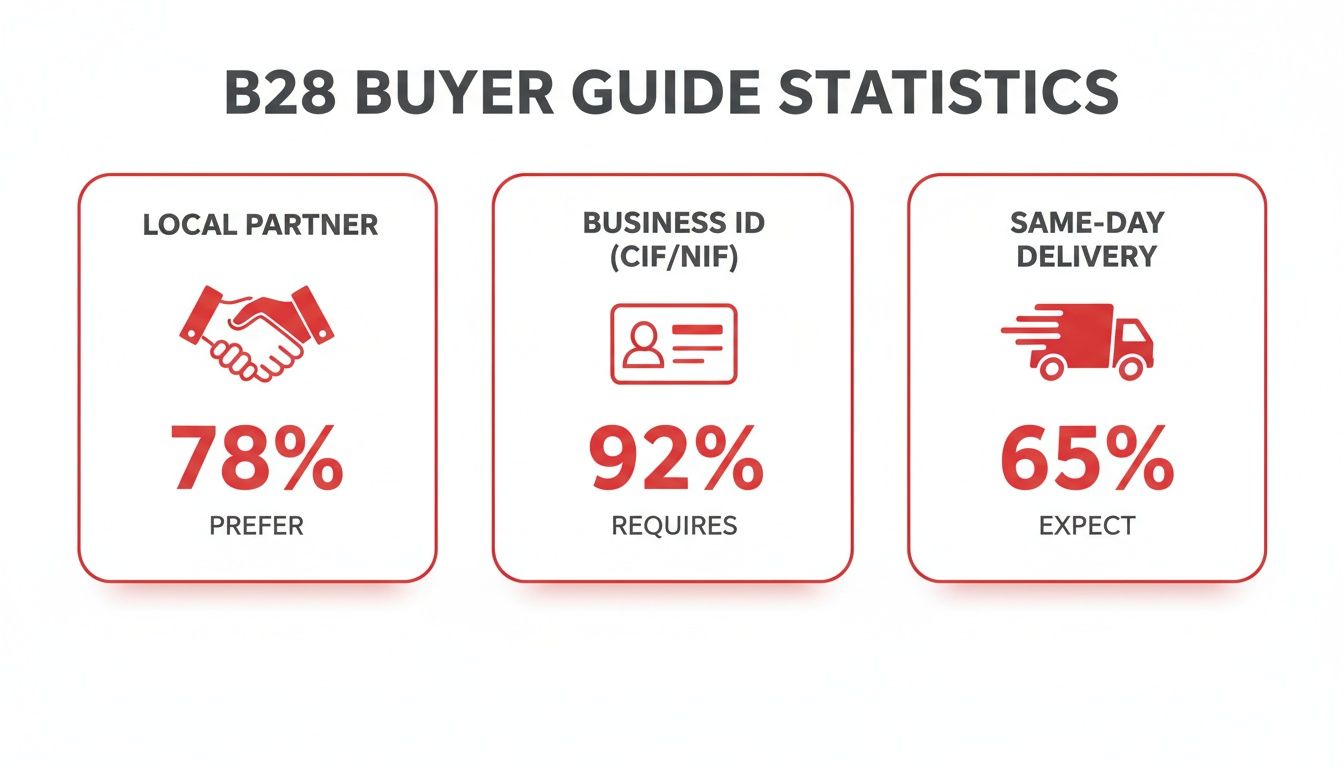
As you can see, the pros aren't just shopping on price. They prioritise local suppliers who understand the need for verified CIF/NIF credentials and can deliver on the promise of same-day logistics—something mainland suppliers simply can't guarantee.
N2O FAQs: Your Questions Answered
There's a lot of noise out there about nitrous oxide. Let's cut through it. I’ve heard these same questions from chefs and bar managers all over the islands, from bustling kitchens in Las Palmas to high-end cocktail bars in Costa Adeje. Here are the straight, no-nonsense answers you actually need.
N2O Quick Answers
Before we dive deep, here’s a quick-reference table that hits the most common questions we get from hospitality pros every day.
This table gives you the basics, but the real value comes from understanding the "why" behind each answer, especially when it comes to running an efficient and compliant business.
Is E942 Actually Legal for My Kitchen in Spain?
Yes, without a doubt. Food-grade nitrous oxide, which you'll see officially labelled as E942, is a completely legal and regulated food additive across the entire European Union, Spain included.
It's perfectly fine to buy and use for any professional culinary purpose—think whipped cream, delicate espumas, or rapid cocktail infusions. The critical part is your supply chain. You must be a registered business, and your supplier must provide certified E942 gas with the proper documentation to prove it.
What’s the Real Difference Between N2O and CO2?
I see this question a lot, and mixing these up can be a costly mistake. While they’re both gases, they behave in completely different ways in the kitchen.
Nitrous oxide (N2O) is fat-soluble. Under pressure, it dissolves beautifully into fats and oils, which is why it creates that light, airy, and stable texture in whipped cream. Carbon dioxide (CO2), on the other hand, is water-soluble. It's what gives soda and sparkling water their sharp, acidic "fizz."
Never, ever put a CO2 cartridge in a cream dispenser. I’ve seen it done. You end up with a sour, carbonated, and completely ruined batch of cream. CO2 creates carbonic acid when it hits water, giving dairy a horribly unpleasant, acidic flavour.
How Much Cream Can I Realistically Make from a Cylinder?
This is where the economics of your operation come into sharp focus. The yield obviously depends on the cylinder size, but let’s talk practical numbers. A single 2kg cylinder of N2O can produce up to 560 litres of finished whipped cream.
To put that in perspective, that’s the equivalent of using more than 250 individual 8g cream chargers. For a busy service, that means you’re not just saving money—you’re saving an immense amount of time and getting rid of a mountain of packaging waste. Once you see that conversion, the value of upgrading to a larger format becomes crystal clear.
For a reliable supply of certified, food-grade E942 nitrous oxide with compliant IGIC invoicing and same-day delivery across the Canary Islands, trust the experts. Kings Canisters ensures your operation runs smoothly and legally.